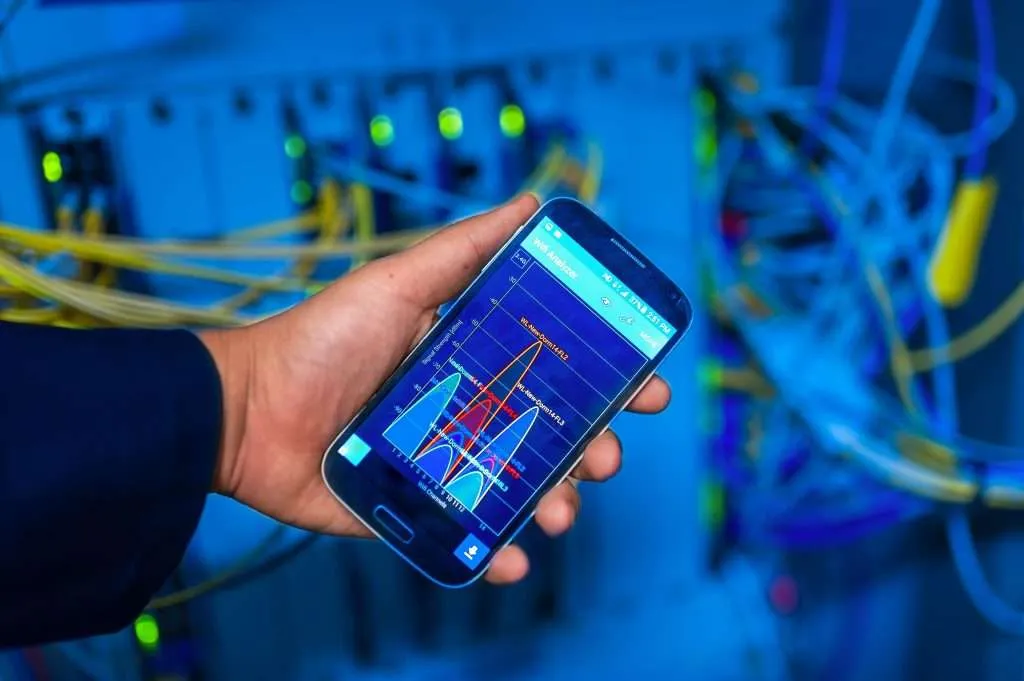
Three hardware sets on the bench. Three programmers attached. Three agents writing and capturing their own serial logs. One oscilloscope that has to move between them. That last detail is the whole problem with running parallel AI agents on firmware, and it is the part nobody writing about this has had to deal with.
The tiredness is real
Running three or four independent agent sessions is mechanically easy, because turns take minutes and there is always another one waiting. What surprised me is how wrecked I am after a few hours of it, given that the machine is doing most of the typing.
Other people have noticed the same thing. Simon Willison has described firing up four agents in parallel and being wiped out by eleven in the morning, and says that using coding agents well takes every inch of his twenty-five years as an engineer.
Nothing I have read examines what happens to any of this when the work has hardware in it.
Why supervising costs more than it looks
The intuition is that watching a machine work should cost less than doing the work yourself. My experience runs the other way, and there is a mechanism behind it.
Ivanova and colleagues found in 2020 that reading and comprehending code recruits the brain’s general-purpose executive network rather than the language network that handles ordinary reading. Code comprehension is executive work in the same way debugging is.
So when I move from writing an implementation to reviewing one an agent produced, I have swapped one demanding task for another while giving up the parts that used to be automatic. Most of the typing I used to do drew on patterns already in my head and cost me almost nothing. Judging whether an unfamiliar approach is correct costs a great deal, because none of it is in my head yet.
That cost is why I keep agent tasks narrow when using LLMs for embedded debugging. It is the same cost that is multiplied when three sessions are running at once.
Lisanne Bainbridge wrote the process control version of this in 1983, decades before anyone had an AI agent. That paper states that by taking away the easy parts of the task, automation can make the difficult parts harder.
That is what happened to the rhythm of the work. Engineering used to alternate hard thinking with low-intensity execution. The filler broke up the hard parts without anyone planning it that way. The AI model has absorbed the filler, so the hard parts now run back to back, and three sessions means three of them interleaved with each other.
What changes when there is hardware
Everything written about running parallel AI agents assumes the work product is text on a screen. You read it and you judge it, and the loop works with multiple parallel agents reasonably well because nothing physical has to happen between reading and deciding.
Firmware does not work that way. The agent’s output is an intermediate artifact, and the deliverable is the behavior of a physical board, which means confirming anything requires putting an instrument on hardware.
Some of that transitions cleanly. An agent can handle its own build-flash-log cycle, and when each session owns its own hardware and its own serial capture, a surprising amount runs without me. That is what the three programmers on the bench are for.
What does not transfer well is anything needing an instrument, because there is one scope. When session two wants a timing measurement, the other two wait. I walk over and move the probes, and by the time the trace is up I have lost the thread on whatever I was thinking about before.
There is a useful model for this from multi-robot supervisory control. Crandall and Cummings expressed the number of units one operator can effectively run as how long a unit tolerates being ignored divided by how long each interaction takes, and their empirical ceiling landed around four to six robots.
Run the same arithmetic on embedded work and the ceiling drops for a structural reason rather than a stamina one. Interaction time gets longer when the interaction involves walking to a bench and moving a probe, so the denominator grows and the number of sessions you can usefully run shrinks. That matches what I see, because the number I can run productively falls as soon as the work moves from pure software to hardware in the loop.
What actually goes wrong at hour five
This is where a personal observation turns into an engineering management problem.
Parasuraman and Manzey’s 2010 review of automation complacency found that operators detected automation failures close to one hundred percent of the time when they had a single task, and substantially less often when they carried several at once. Complacency appeared in novices and experts alike, and practice did not remove it. The parallel load itself causes the degradation.
So, what worries me after a long day of four sessions is the approval I gave in hour five that I would have questioned in hour one, with experience offering no protection against it.
In firmware, what you stop catching does not stay cosmetic. A race condition that reproduces once a week passes review comfortably, because nothing about the code looks wrong on a screen, and it keeps passing until a customer finds it. The cost lands later as returns and field visits and a release you have to pull back, by which point the connection to a tired afternoon in September is invisible.
The 2025 Stack Overflow survey of about 49,000 developers found that the top frustration with AI tools was solutions that were almost right but not quite, and that 45 percent named the time it takes to debug AI-generated code as a problem in its own right. Almost-right is the category a tired reviewer waves through, and it is the part of the argument about AI-generated code that has not resolved itself the way the compiler debate eventually did.
What I do now when running parallel AI agents
I run fewer sessions than I can. Three is usually right for me, and four is where I start managing my attention rather than the work.
I sort the sessions by what they need instead of spreading them evenly. Anything wanting an instrument gets scheduled for when I can give it real attention, and the build-and-log cycles that run unattended get pushed to when I cannot.
Breaks help, though not the five-minute kind. What works for me is long enough to genuinely leave the problem behind, which is closer to an hour for lunch than a short break. Stepping away for two minutes between agent turns is a shorter gap in the same session rather than a break from it.
The rule that has caught the most is treating the last hour of a long parallel day as review time instead of approval time. If something needs a decision I cannot easily reverse, it waits until morning.
If your team is adopting agent-assisted development on firmware and nobody has written down what verification means when a model wrote the code, that gap is worth closing before it shows up as a field failure. Start here and tell us how your team is using these tools today, and we will tell you where we would draw the verification line.
FAQ
Can you run multiple AI coding agents in parallel on embedded projects?
Yes, and the build-flash-log cycle works in multiple parallel sessions better than you might expect, as long as each session owns its own hardware and its own serial capture. The constraint shows up at any step needing a shared instrument such as a scope or logic analyzer, which forces the sessions into a queue and forces you to context-switch while physically moving between benches.
What is a reasonable number of agents for one developer to supervise when running parallel AI agents?
Multi-robot supervisory control research found effectiveness plateauing around four to six units, with the ceiling set by how long a unit tolerates neglect against how long each interaction takes. Embedded work pushes that number down, because interactions involve hardware and take longer. In my own practice three is comfortable and four is where quality of attention starts mattering more than throughput.
Does using AI coding agents make developers less likely to catch bugs?
Under multitask load, yes. Parasuraman and Manzey found failure detection near perfect for single-task operators and substantially degraded when operators carried several tasks at once, in both novices and experts, and practice did not fix it. Supervising multiple parallel AI agents running at once is a multitask load by definition.
What should a firmware team put in place before adopting agent-assisted development?
Decide what verification means when a model wrote the code, then write it down. Start with which changes require hardware confirmation rather than review alone. Then settle who reviews anything that touches interrupt handling or timing, and how a change gets tested under load rather than on a quiet bench. Tool documentation will not tell you this.
Who can help with running parallel AI agents on firmware without losing verification rigor?
At Embedded Engineering Solutions, our team works on firmware for medical, industrial and connected products, frequently on hardware we did not design, and uses agent-assisted development daily on real client work, oftentimes running parallel AI agents for that work. If your team is adopting these tools and wants a verification approach that survives production rather than one that only passes review, that conversation is better had before the first field failure than after.